Technology Advisory Group

Technology Assessments.

A vendor-neutral review of voice, internet, cloud and security across every location, with a roadmap the business can act on and no product to push.

A technology assessment is a review of the systems the sites depend on to trade: the phone system, the internet circuits, the firewalls, the cloud services, and the contracts sitting behind all of them. It covers every location, and it treats them as one business rather than a pile of separate bills.

The review starts from what the business needs, not from a product, so the answer can be that the current setup is fine.

Most companies have never had this done, and not because they were not paying attention. The information genuinely exists. It just lives in invoices, inboxes and a few people's heads, spread across every office, and no one has ever had a reason to pull it into one place.
Every new office, acquisition or remote team adds another carrier, another contract and another bill. Each one made sense on its own day. Put ten years of them together and no single person can say what the business is paying, what it is running, or where it is exposed.

That uncertainty has a price. A multi-site business typically carries three to five times the vendors it actually needs, and once duplication and unused services are stripped out, most recover somewhere between ten and thirty percent of what they were spending on telecom and cloud.

The pattern is always the same. Each location bought its own internet and phone service from whoever knocked first, contracts auto-renew at full price because nobody is tracking dates across the portfolio, and one office has a managed firewall and multi-factor authentication while the next has a consumer router and a shared password.

Meanwhile the lines at closed offices keep billing, the seats for departed staff keep billing, and when something breaks the first hour goes on working out what is even there. With voice, internet and cloud coming from different vendors, every outage turns into a blame game with the business as the referee.

The work produces four things, written so the finance team and the IT team can both use them.

The first is a complete inventory: one register of every circuit, phone system, cloud service, firewall and contract across all locations, with renewal dates and owners. The second is a spend and contract analysis of what is paid and to whom, flagging retail pricing, duplicate services and the contracts that should be consolidated or renegotiated.

The third is a set of risk and security findings, a clear read on exposure across sites and, more usefully, on the gap between the strongest and weakest location. The fourth is a prioritized roadmap: quick wins first, larger projects sequenced, each with the expected cost, saving and effort.

The engagement finishes with the whole estate on one page, a clear view of where the money and the risk are, and a vendor-neutral plan to fix it, with or without T Advisors to execute it.

What the assessment reviews

Five areas, every location.

The full technology stack that keeps the sites connected, productive and protected.

How it works

From scattered bills to a plan the business can run.

A five-step engagement. The heavy lifting sits with T Advisors, not with the client's team, and the last step does not end.

  1. 01

    Discover

    T Advisors gathers invoices, contracts and inventory across every site. No long meetings required.

  2. 02

    Analyze

    The firm maps spend, services and risk into one picture, and finds the waste and the gaps.

  3. 03

    Recommend

    The client receives a prioritized roadmap with costs, savings and the case for each move.

  4. 04

    Manage

    Where the client wants it, T Advisors helps source the vendors and manages them for the life of the contract.

  5. 05

    See it

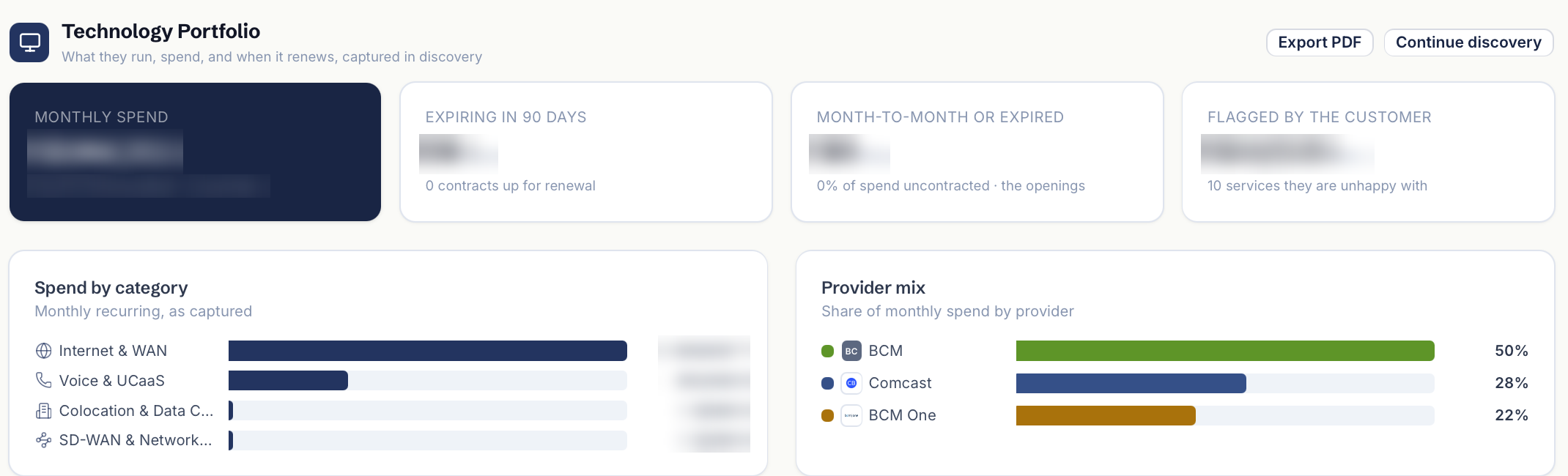
    The client gets a portal onto their own technology portfolio: every service, what it costs, who provides it and when it renews, kept current for the life of the relationship rather than going stale the week the report is delivered.

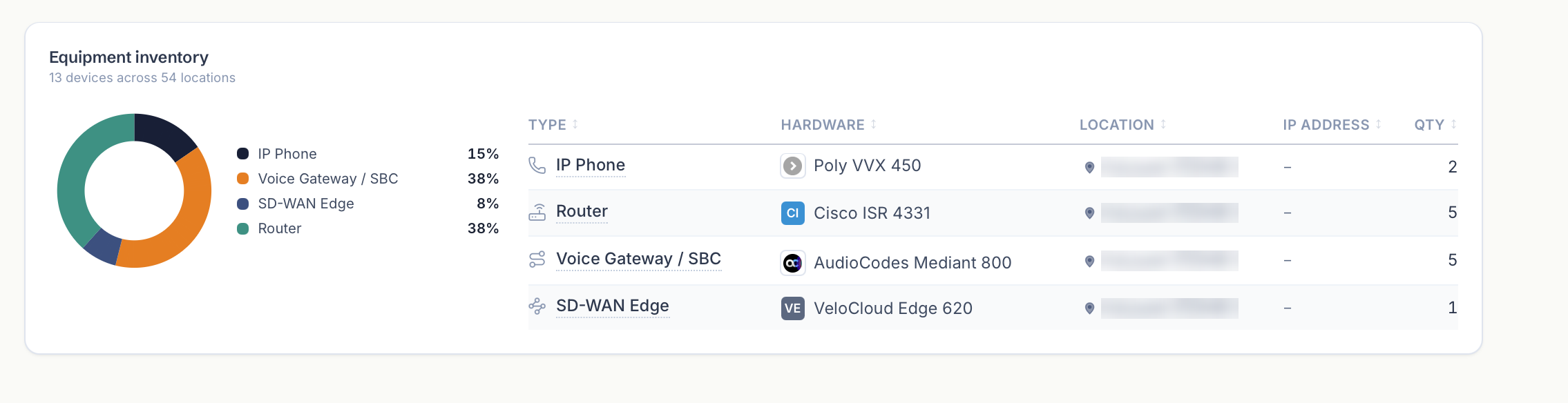
    Screenshot of the portal The client portal, showing a technology portfolio with monthly spend, contracts expiring within ninety days, spend by category and provider mix. Spend figures and the account name are obscured. The client portal equipment inventory, listing device type, hardware model, location and quantity across every site. Account identifiers are obscured.
    The portal as the client sees it, showing every service, what it costs, who provides it and when it renews. Spend figures and identifying details are obscured here; the client sees their own in full.
Client work

Assessments that turned into networks the business can rely on.

Two Florida businesses, twelve locations, one provider each. Both started with a vendor-neutral review.

Both engagements started with a vendor-neutral assessment.

An assessment starts with what is already in place, defines what the business needs, and lets providers quote against the same requirement.

Start a conversation
Frequently asked

Questions about technology assessments

A technology assessment is a review of the systems every location depends on: the phone system, the internet circuits, the firewalls, the cloud services, and the contracts behind all of them. It treats the locations as one business rather than a set of separate bills, and it ends with a prioritized plan.

Five areas at every location: voice and UCaaS, internet access and SD-WAN, information security, cloud services, and managed services. Each area has its own page describing what the review covers.

Four things, written so the finance team and the IT team can both use them: a complete inventory of every circuit, phone system, cloud service, firewall and contract with renewal dates and owners; a spend and contract analysis; risk and security findings, including the gap between the strongest and weakest location; and a prioritized roadmap with the expected cost, saving and effort of each step.

T Advisors starts by gathering invoices, contracts and the equipment inventory across every site. The heavy lifting sits with T Advisors rather than with the client's team, and no long meetings are required.

Only where a change is justified. The assessment can conclude that the current setup is fine. Where it recommends a change, it defines what the business needs first and lets providers quote against the same requirement, so their proposals can be compared like for like.

Where the client wants it, T Advisors helps source the vendors and manages them for the life of the contract, and the client gets a portal showing every service, what it costs, who provides it and when it renews. The roadmap is written so the business can also carry it out without T Advisors.